Quick Answer: When is the Best Time to Visit Dunk Island?
You’ve narrowed your Tropical North Queensland trip down to Dunk Island and you’re one decision away from locking it in: which month.
You don’t want a wasted week of rain, you don’t want to swim in stinger season without knowing the rules, and you don’t want to discover the restaurant is closed the day you arrive. As the team running the island, you’ll get the straight answer below — not a glossy overview. Here’s the best time to visit Dunk Island, what each month actually feels like, and how to plan around the parts that aren’t obvious from the weather chart.
The best time to visit Dunk Island is May to October — Tropical North Queensland’s dry season — when daytime temperatures sit between 22°C and 28°C, rainfall is low, the seas are clear of marine stingers, and September is typically the driest, calmest month.
For travellers wanting one date to circle, September is the sweet spot: warm but not humid, school holidays bring a buzz to the island without overwhelming it, and the Coral Sea is at its clearest for snorkelling. June and July are quieter and slightly cooler — ideal if you want the island to yourself.
At a glance:
- Dry season: May to October
- Wet season: November to April
- Stinger season: November to May
- Cyclone risk peak: January to March
- Best single month: September
- Beachfront Eco Tent trading days: Wednesday to Sunday from Easter onwards
- Bayside Campsites: open year-round
Table of Contents
- Quick Answer: When is the Best Time to Visit Dunk Island?
- Dunk Island’s Two Seasons Explained
- Month-by-Month at a Glance
- Best Time to Visit Dunk Island for Each Type of Trip
- Marine Stinger Season: What You Need to Know
- Cyclone and Wet-Season Planning
- When Parts of the Island are Closed or Limited
- The Shoulder Months — June and September
- FAQs
- Picked Your Month? Plan Your Trip
Dunk Island’s Two Seasons Explained
Dunk Island sits on the same tropical pulse as Mission Beach, 4 km off the Cassowary Coast. You’re firmly in the tropics, which means there’s no spring/summer/autumn/winter rhythm to plan around — just two seasons that behave very differently.
The Dry Season (May to October)
The dry season is what most people picture when they imagine Tropical North Queensland: blue skies, calm seas, daytime temperatures in the mid-20s, and humidity that finally lets you sleep through the night. Rainfall drops sharply from May onwards and stays low until November. Trade winds keep the air moving along the beachfront. This is the high season for a reason — and the season that makes Dunk Island the best version of itself for first-time visitors.
The Wet Season (November to April)
The wet season — locals also call it the green season — is hotter, wetter, and more dramatic. Afternoon thunderstorms build over the mainland and drift across the channel. Rainforest fills out. Waterfalls on the nearby tablelands run hard. Sea temperatures climb past 28°C. Crowds thin and prices drop. It’s a genuinely different island in this period — and not a worse one, if you know what you’re walking into.
Two important wet-season facts worth knowing up front: marine stingers are active in coastal waters from roughly November to May, and cyclone season runs from November to April with the highest risk in January, February and March. Both are manageable, and both are covered in detail further down.

Month-by-Month at a Glance
The table below gives you the headline numbers and the operational facts in one place. Temperature and rainfall figures are based on long-term Bureau of Meteorology averages for the South Mission Beach / Tully weather stations, the closest representative data to Dunk Island.
| Month | Avg max °C | Avg rainfall (mm) | Sea temp °C | Stinger risk | School holidays (AU) | What’s open |
|---|---|---|---|---|---|---|
| January | 31 | ~520 | 29 | High | Yes (until late Jan) | Bayside Campsites |
| February | 31 | ~600 | 29 | High | No | Bayside Campsites |
| March | 30 | ~450 | 29 | High | No | Bayside Campsites |
| April | 29 | ~230 | 28 | Moderate | Yes (Easter) | Campsites + Eco Tents + Restaurant |
| May | 27 | ~110 | 26 | Low | No | Full island operation |
| June | 25 | ~60 | 25 | Nil | Late June | Full island operation |
| July | 24 | ~40 | 24 | Nil | Yes (early–mid July) | Full island operation |
| August | 25 | ~35 | 24 | Nil | No | Full island operation |
| September | 26 | ~30 | 25 | Nil | Late September | Full island operation |
| October | 28 | ~50 | 26 | Low | No | Full island operation |
| November | 29 | ~110 | 27 | Moderate | No | Full island operation |
| December | 30 | ~280 | 28 | High | Yes (mid Dec onwards) | Bayside Campsites |
Numbers are rounded long-term averages — actual conditions vary year to year. For the latest official forecast, the Bureau of Meteorology publishes daily updates for the Cassowary Coast.
For a fuller seasonal narrative, see the full Dunk Island Seasons page.
Best Time to Visit Dunk Island for Each Type of Trip
When to visit also depends on what you actually want to do once you’re here.
Best time for snorkelling and the reef
June to October. The water clears as the wet-season run-off settles, visibility hits its best, and there are no stingers to plan around. September often delivers the calmest mornings — ideal for snorkelling the fringing reef off the beachfront.
Best time to hike Mt Kootaloo
May to September. The 7 km return summit walk is shaded but humid; doing it outside the dry season is hot work. Cooler dry-season mornings are your friend. July mornings can drop to 15°C — perfect hiking weather.
Best time for camping
Any time of year, with caveats. The Bayside Campsites operate year-round, but dry-season nights are far more comfortable for canvas sleeping. June and July are popular because of the cool, dry conditions; September school-holiday weeks book out months ahead.
Best time for the Beachfront Eco Tents
June through October. The Beachfront Eco Tents trade Wednesday to Sunday and are the most weather-dependent of the accommodation options.
Best time for a wedding or event
May, June, August or October. Reliable weather, manageable humidity, and the island feels alive without being packed. See Groups and events for capacity and packages.
Best time to see Ulysses butterflies
Late wet to early dry — March to May. The vivid electric-blue Ulysses butterfly is most active when the rainforest is still full of nectar from the wet season. They’re a quiet highlight of a shoulder visit.
Marine Stinger Season: What You Need to Know
Marine stinger season at Dunk Island runs from November to May. Two species matter: the box jellyfish (Chironex fleckeri) and the smaller, harder-to-see Irukandji (Carukia barnesi). Both can cause serious stings. Both are easy to plan around if you know the rules.
What this means in practice during stinger season:
- Wear a stinger suit when entering open water — full-body Lycra protects against most stings.
- Avoid swimming after rain or river flushes — these conditions push more stingers inshore.
- Snorkel from a boat off the reef rather than wading in from the beach during peak stinger months.
From June to October there are effectively zero stingers in the water around Dunk Island, and you can swim from the beach as you would anywhere on the Great Barrier Reef coast. Surf Life Saving Queensland publishes ongoing safety guidance on marine stingers if you want the full picture.
Cyclone and Wet-Season Planning
Tropical cyclone season in North Queensland runs from 1 November to 30 April, with the highest activity in January, February and March. Most cyclones don’t make landfall, and most wet-season days see brief afternoon thunderstorms rather than washouts — but the risk is real and worth planning around.
A few practical points:
- Cyclone alerts are public and early. The Bureau of Meteorology gives several days’ warning. You won’t be caught by surprise.
- The Dunk Island ferry has a clear weather policy. If services are cancelled due to safety conditions, ticket holders receive a full refund. Check the ferry timetable and shuttle for current schedules.
- Travel insurance is sensible. A standard policy covering cyclone disruption is inexpensive and removes the only real planning anxiety.
- The green season has genuine upsides. Lower prices, far fewer people, lush rainforest, dramatic skies, warm sea, and waterfall hikes on the tablelands at their best.
Plenty of regular visitors deliberately choose February or March precisely because the island feels secluded and the green-season character is at its peak. It’s not the right call for a first visit — but it’s not a wasted trip either.
When Parts of the Island are Closed or Limited
Honest answer: not everything runs all year. Here’s the operational picture month-by-month.
- Beachfront Eco Tents: open Wednesday to Sunday from Easter onwards. Closed Monday and Tuesday.
- Bayside Campsites: open year-round, BYO setup, weather-dependent for comfort.
- Dunk Island Restaurant: seasonal trading days that align with peak visitor flow. Check current opening days at the time of booking.
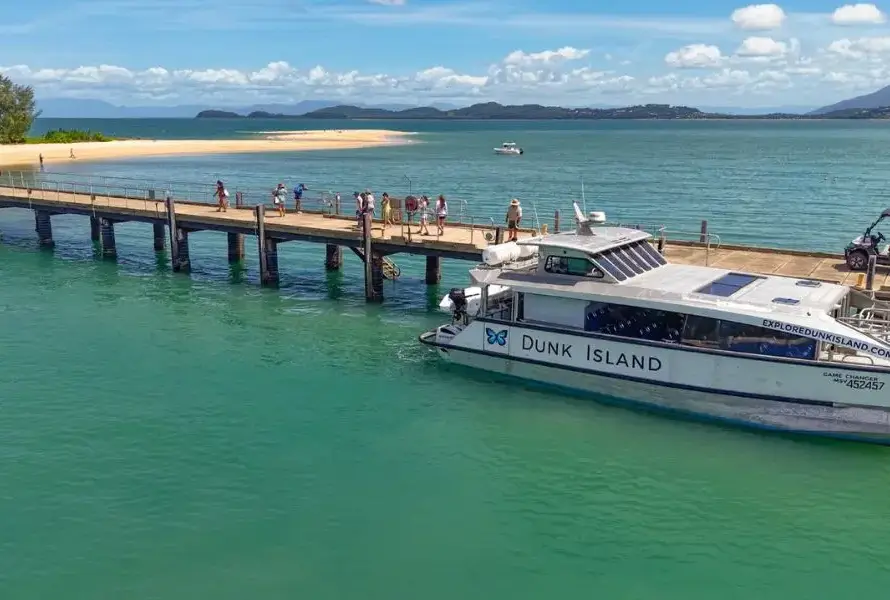
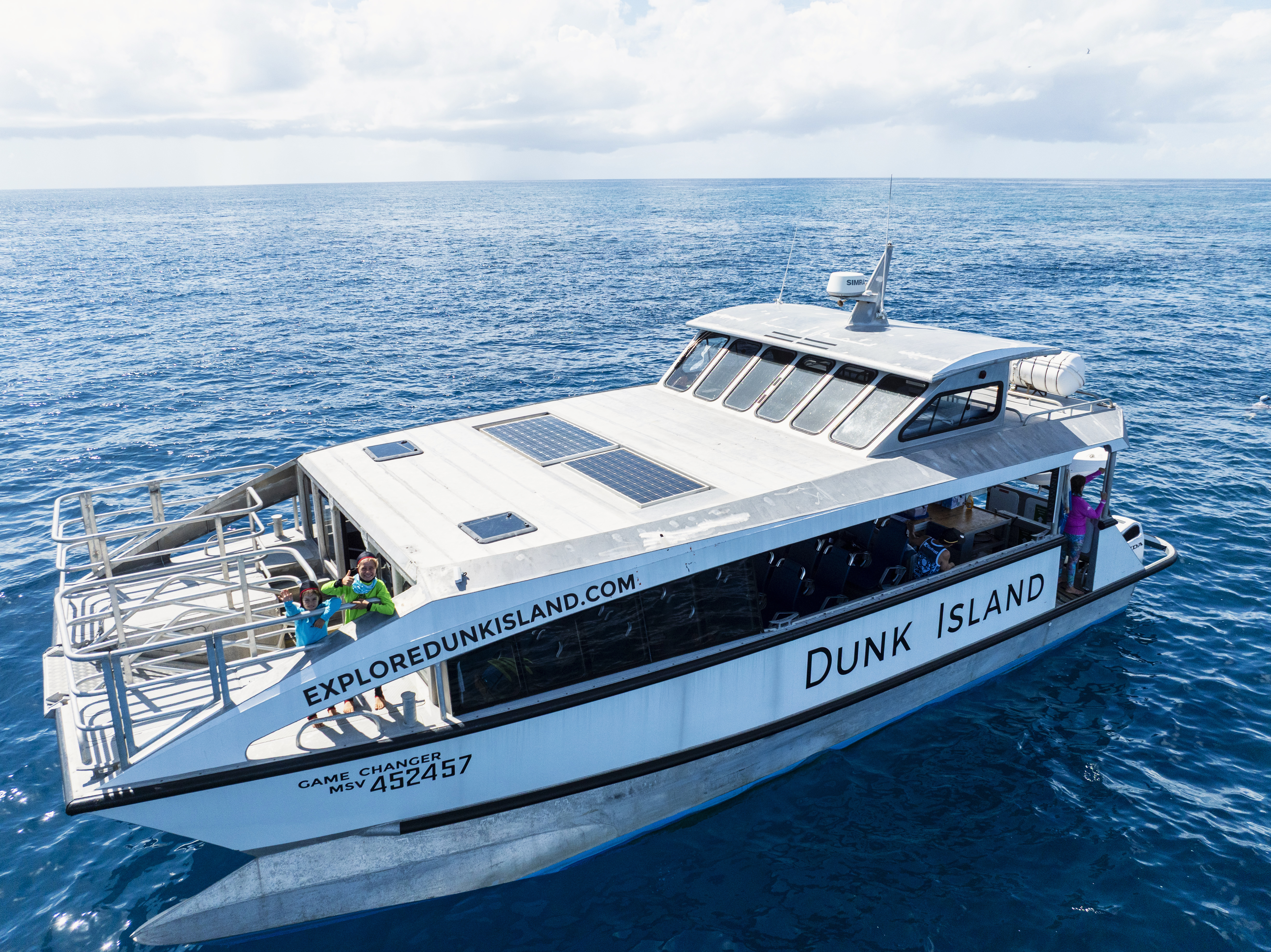
- Mission Beach Ferry: the official Dunk Island ferry runs through the main season; service may pause for parts of the wet season. Always check current sailings before locking flights.
- Walking trails: open year-round, but parts of the island trails can become unstable following continuous rain events.
If you’re visiting for a specific facility — the restaurant, a particular accommodation type — confirm trading days before you book. The frequently asked questions page lists the latest operational status.
The Shoulder Months — June and September
If you want the dry-season weather without the school-holiday crowd, June (excluding the last week) and September (excluding the last week) are the sweet spots. Mid-June and early-September dates consistently deliver:
- Daytime highs of 24–26°C with low humidity
- Water temperatures around 25°C — refreshing but not cold
- No stingers, no cyclone risk
- Quieter ferry crossings and easier accommodation availability
The catch: Australian school holidays in late June and late September push demand sharply. The island books out for those two weeks first, often six months in advance. If your dates are flexible, slot in mid-month and you’ll feel like you’ve discovered a secret.
FAQs
What is the best month to visit Dunk Island?
September is the best single month to visit Dunk Island. Daytime temperatures average 26°C, rainfall is at its annual low, the Coral Sea is at its clearest, and there are no marine stingers.
When is stinger season at Dunk Island?
Stinger season at Dunk Island runs from November to May. Box jellyfish and Irukandji are most active in coastal waters during this period. From June to October the water is effectively stinger-free.
Can you visit Dunk Island in the wet season?
Yes, you can visit Dunk Island in the wet season (November to April). Expect higher humidity, warmer seas, afternoon storms and the chance of cyclone disruption. Many travellers favour the green season for its lower prices, smaller crowds and lush rainforest. It’s important to note that the Dunk Island Restaurant, ferry service and Beachfront Eco Tents are seasonably closed during the wet season – typically February and March.
Is Dunk Island good to visit in winter (July–August)?
Dunk Island in winter is excellent. Average maximum temperatures sit at 24–25°C, humidity is low, the sea is calm and stinger-free, and you can hike Mt Kootaloo in comfortable conditions. Australian winter (June to August) is one of the most reliable windows of the year.
When is the cheapest time to visit Dunk Island?
The shoulder season (April, May, November and December) typically offers cheaper rates for Bayside Campsites and Beachfront Eco Tents, however ferry prices remain consistent year-round.
Is Dunk Island open all year round?
Yes, Dunk Island is open year-round. Bayside Campsites operate every day of the year. The Beachfront Eco Tents trade Wednesday to Sunday from 1 April to January. The restaurant operates on seasonal trading days, and the Mission Beach ferry runs through the main season — check current schedules before you book.
What is the weather like on Dunk Island in summer?
Dunk Island in summer (December to February) is hot and humid, with daytime temperatures around 30–31°C, sea temperatures of 28–29°C, and the year’s heaviest rainfall. Afternoon thunderstorms are common, and stingers are present in coastal waters. It’s the most tropical version of the island — lush, warm and dramatic.
Do you need to book Dunk Island in advance?
Yes. Book ferry tickets and Eco Tent or campsite stays at least 4–8 weeks ahead for the dry season, and three months ahead for school-holiday weeks. The island has limited overnight capacity, so peak dates book out earlier than most mainland destinations.
Picked Your Month? Plan Your Trip
If you’ve decided on a month, the next step is a ferry seat. Check current availability on the Mission Beach ferry to Dunk Island, and if you’re staying overnight, browse availability on the Beachfront Eco Tents and Bayside Campsites for your chosen week.
Still weighing months? Read more on the activities, hikes and wildlife you can plan around the calendar, or jump to the Dunk Island Seasons page for the full operational rhythm. Whatever month you pick, the island will be ready.